

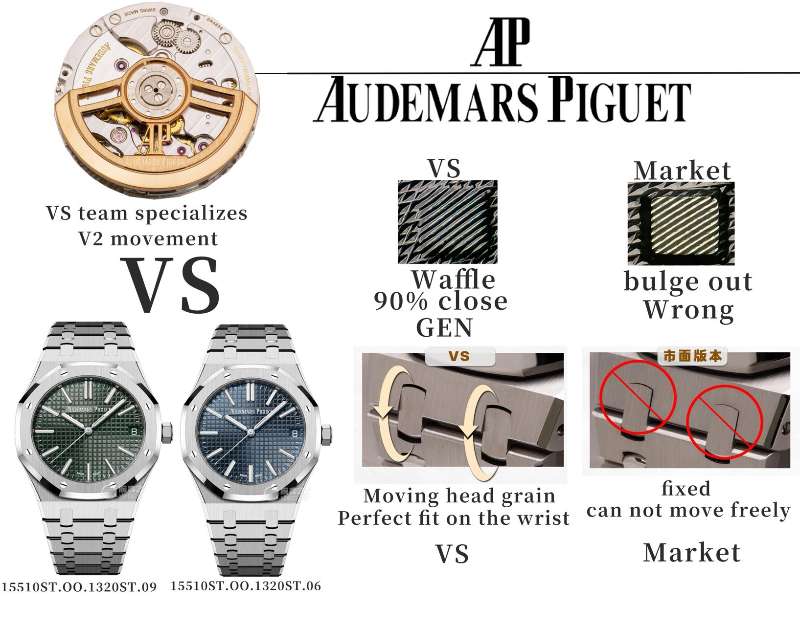
AP updated the Royal Oak from the 15500 to the 15510 with a few changes that matter: refined lugs, a new dial layout, and a more ergonomic case profile. Most rep factories ignored the update. They put 15510 dials into leftover 15500 cases and called it a day. If you knew what to look for, the tells were obvious.
VSF Watch built its 15510 from the ground up. New case, updated movement, correct dial transitions. Here's what's different.
1. Movement: Dandong 4302 V2
The previous generation of AP clone movements had three recurring problems: short power reserve, random stopping, and date wheels that got stuck between positions. VSF's V2 version of the Dandong 4302 addresses all three.
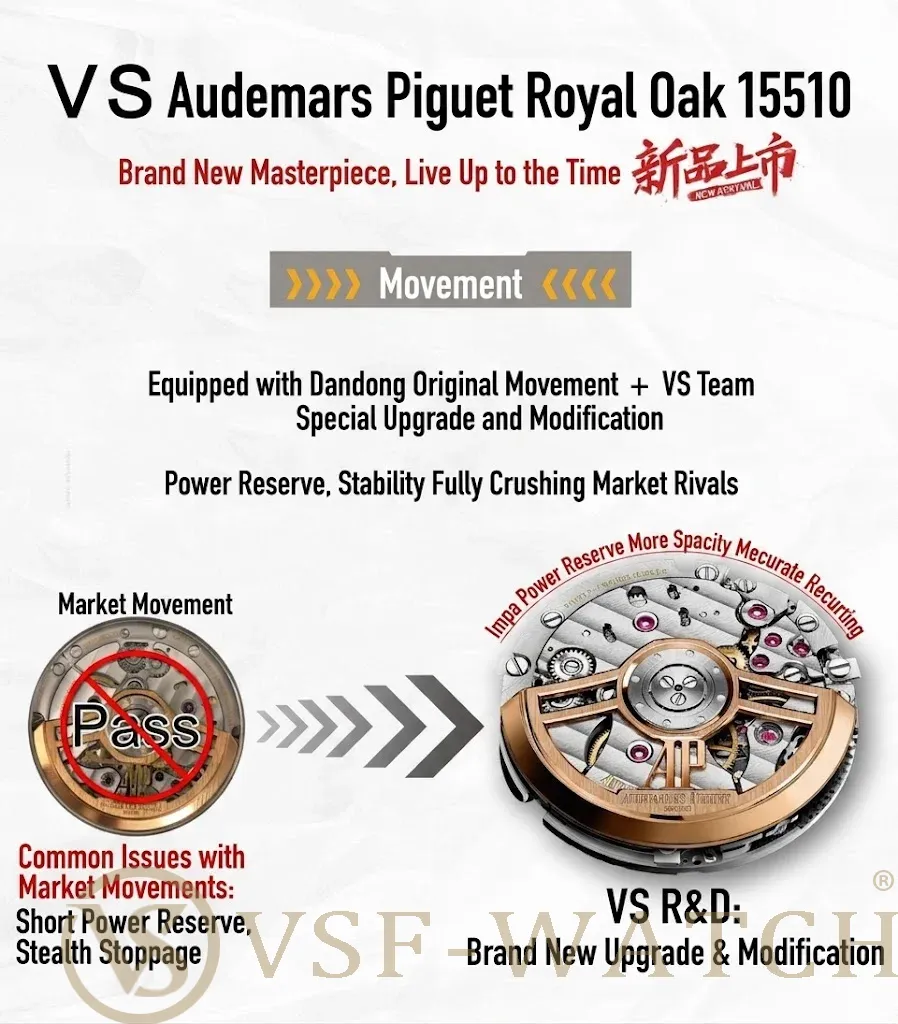
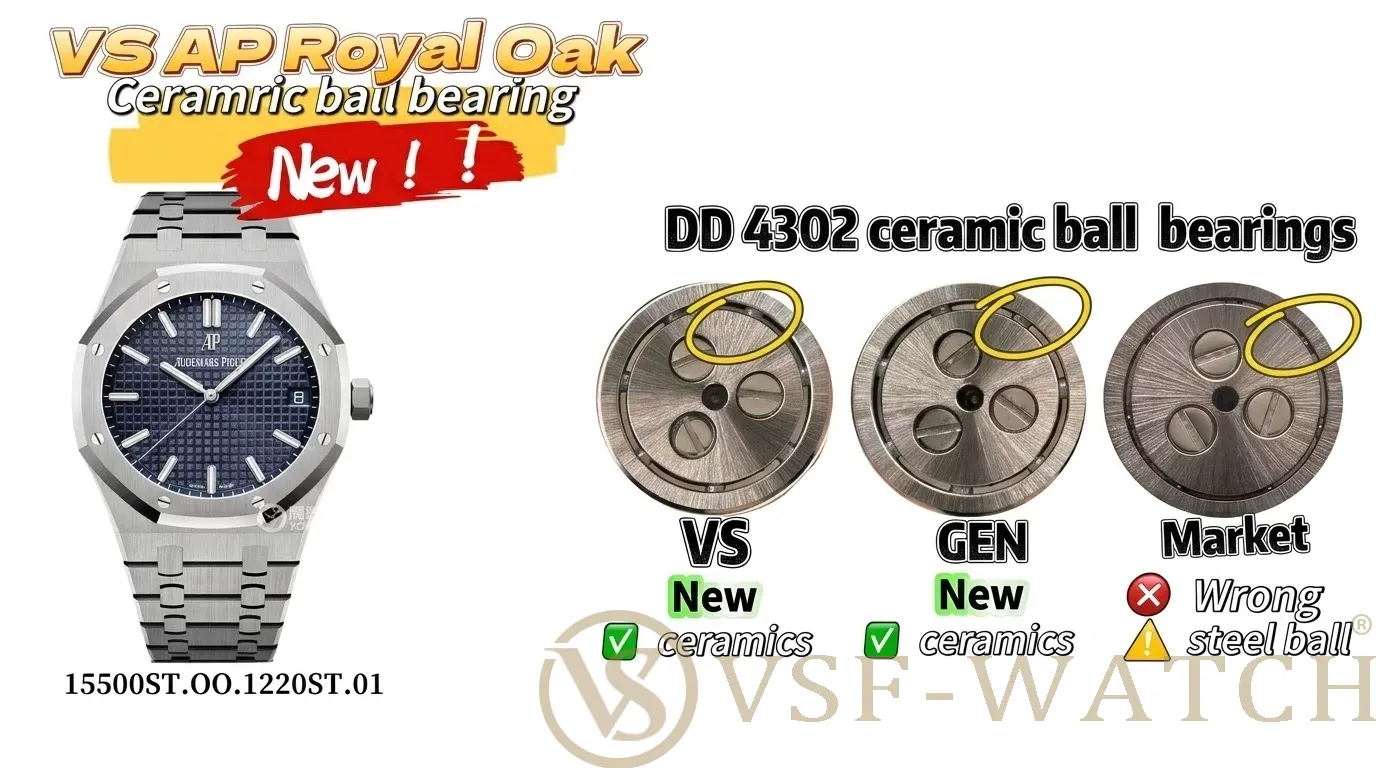
Power reserve is 72 hours, which is a real number rather than an optimistic estimate. The rotor runs on ceramic ball bearings, the same as gen, so the winding is quiet and smooth. The older steel-bearing rotors produced a metallic scratching sound every time the watch moved. That's gone.
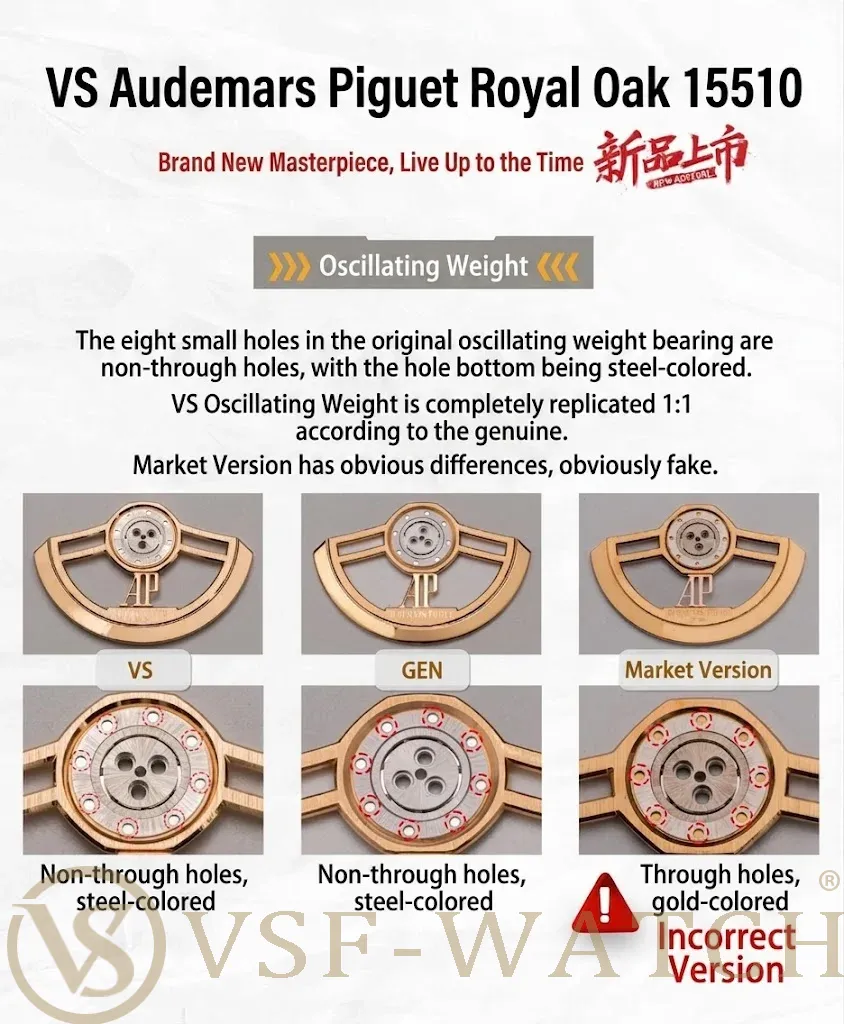
The rotor itself is worth looking at under macro. The central bearing area has eight small circular indents. On gen, these indents are not see-through — the base of each indent shows steel. Market clones drilled them all the way through with a gold-toned base underneath, which was wrong and visible through the display caseback. VSF got this right: non-transparent indents with a steel-colored base, matching gen.
2. Dial: olive green, waffle pattern, and hands
The 15510's "Grande Tapisserie" waffle dial is the first thing anyone looks at, and the olive green variant is the hardest to match. Market versions lean yellow — the green isn't deep enough, and under natural light, the metallic luster falls flat. VSF got the olive tone close to gen. It's a cool, muted green with the right metallic shift under an angle.
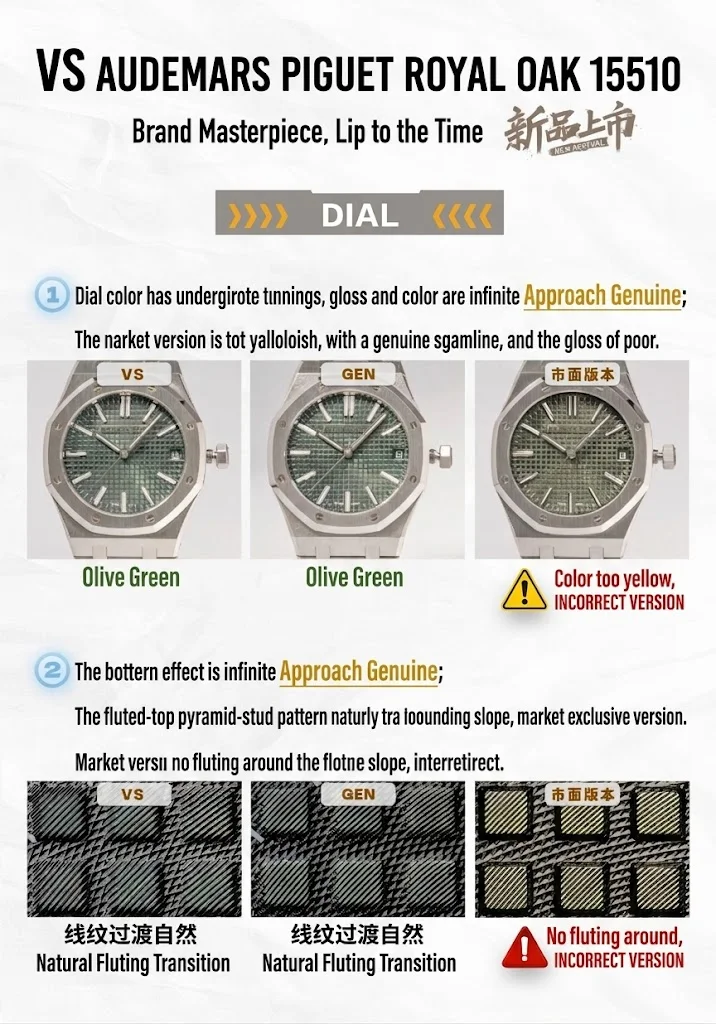
The dial edge is where most factories fail. On gen, the checkerboard waffle pattern transitions naturally into the sloped outer minute track. The texture fades rather than cuts off. Market versions have a completely flat, blank sloped edge with no texture at all — the waffle stops abruptly, and the outer ring is smooth. VSF is the only factory that replicates the textured transition correctly.
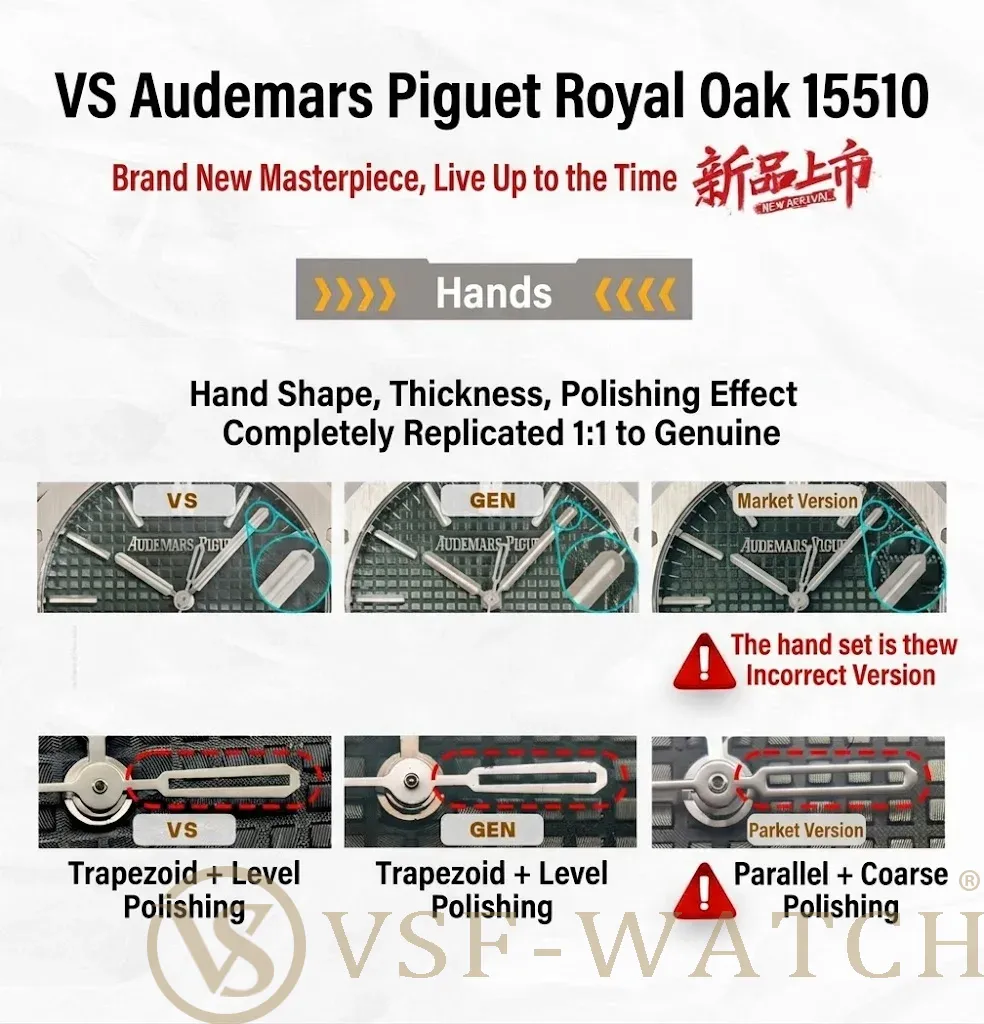
The hour and minute hands on the 15510 are broader than the 15500's. VSF matched the wider trapezoidal profile with clean beveling on the edges. Competitor hands are too thin, and the edges are rough under magnification.
3. Case: tapered lugs
This is the easiest way to tell a real 15510 case from a repurposed 15500 case. The 15510 has lugs that taper — wider at the top, narrower at the bottom. The 15500 had parallel lugs that were chunkier throughout. Most rep factories didn't retool for this. They used the existing 15500 cases, which means the lug profile is wrong for a 15510.
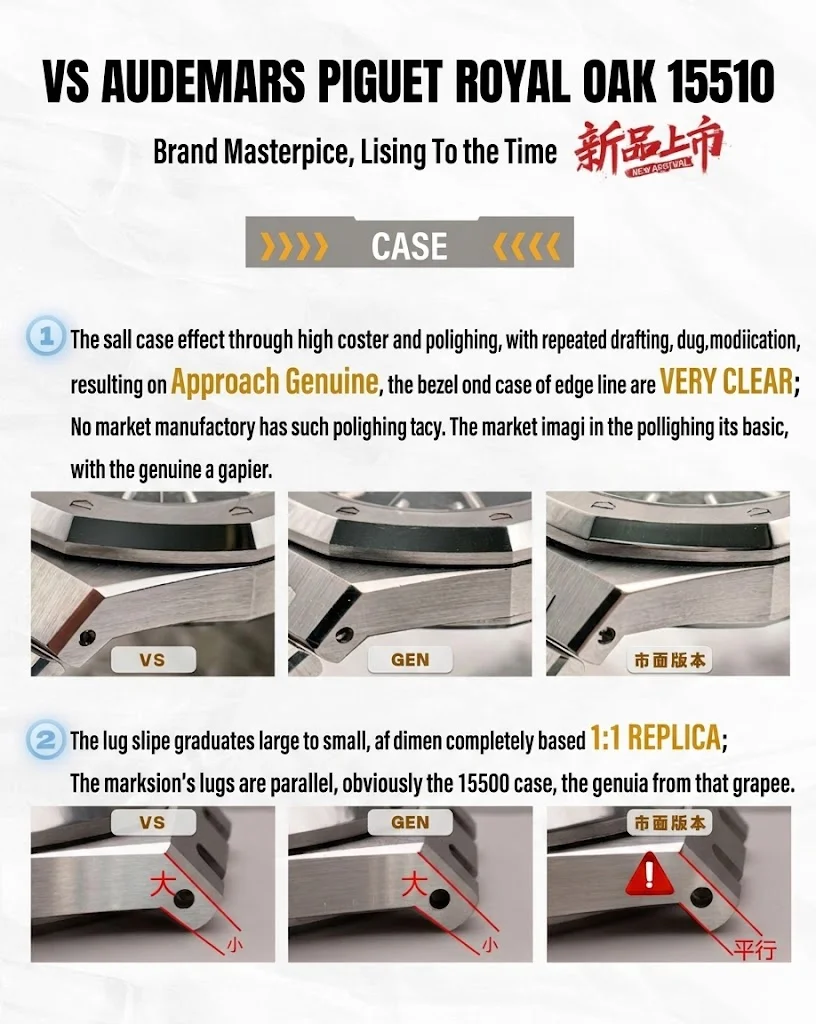
VSF machined the correct tapered lugs. The multi-stage brushing and polishing along the bezel and lug chamfers is sharp and defined. Market versions with reused 15500 cases have duller transitions between brushed and polished surfaces, and the chamfer lines aren't as distinct.
4. Bracelet and clasp
The end-links, where the bracelet meets the case, are the key to how a Royal Oak wears. VSF's end-links articulate downward, so the bracelet drapes around the wrist rather than sitting stiffly. Competitor versions have fixed end-links with almost no range of motion, which makes the 41mm case wear larger than it should and leaves a gap between the bracelet and wrist on smaller wrists.
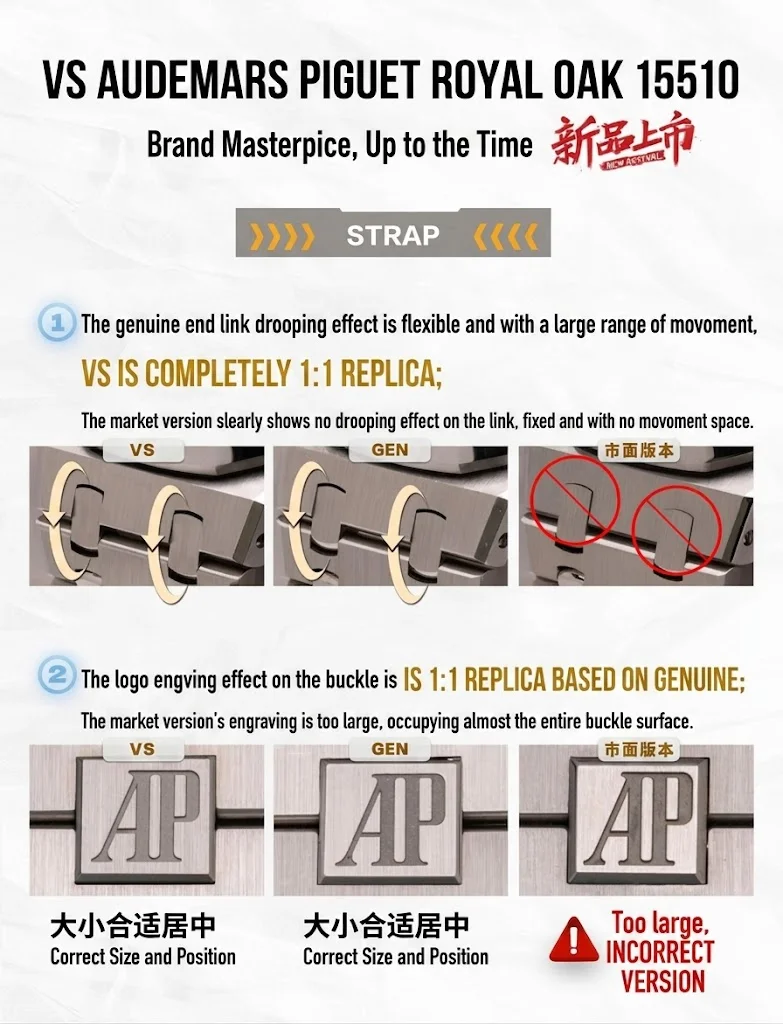
On the clasp, the "AP" monogram engraving is sized and centered correctly. Market versions engrave the letters too large, practically spilling over the edges of the clasp square. Under any magnification, the sizing difference is obvious.
| Feature | VSF 15510 | Standard market versions |
|---|---|---|
| Movement | Dandong 4302 V2, ceramic bearings, 72h reserve | Older clone, steel bearings, shorter reserve, random stopping |
| Rotor indent detail | 8 non-transparent indents, steel-colored base | Hollow/see-through indents, gold base (wrong) |
| Dial edge transition | Waffle texture fades into a sloped minute track | Blank flat edge, waffle cuts off abruptly |
| Olive green tone | Cool muted green, metallic luster | Yellow-leaning green, flat color |
| Hand profile | Broad trapezoidal, clean beveling | Too thin, rough edges |
| Lug taper | Tapered (15510 spec) | Parallel (reused 15500 case) |
| End-link articulation | Flexible downward drop | Stiff, fixed, no range of motion |
| Clasp AP monogram | Correctly sized, centered | Oversized, bleeding over the edges |
Bottom line: The 15510 is not a 15500 with a new dial. The lugs changed, the dial edge transition changed, the hands got wider. VSF's version gets all three right because they didn't reuse old cases. The Dandong 4302 V2 fixes the reliability problems that made earlier AP clones a gamble.
If you're choosing between VSF and a competitor 15510, check the lugs first. Parallel lugs means it's a 15500 case with a 15510 dial slapped on. Check the outer dial edge second. Blank flat ring means the waffle pattern stops too early. Both are things you can see in QC photos if you know what to look for.
VSF Watch AP Royal Oak 15510: What Changed from the 15500 an
 VSF Watch AP Royal Oak 15500 (Dandong 4302): Why is it so po